
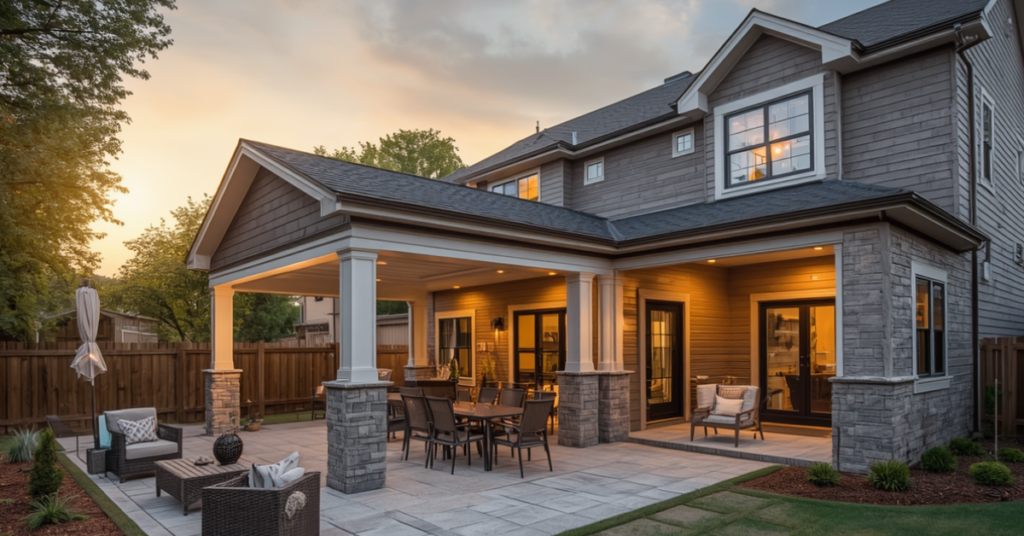
Sustainable building materials are no longer a niche consideration—they are becoming a standard expectation for homeowners looking to build or remodel in Central Oregon. With rising energy costs, evolving building codes, and increased awareness of environmental impact, 2026 is shaping up to be a defining year for eco-conscious residential construction.
For homeowners in Bend, Redmond, Sisters, and surrounding areas, sustainability is not just about being “green.” It is about building homes that perform better in extreme temperature swings, reduce long-term maintenance costs, and increase property value over time.
At Cornerstone Residential, we help homeowners evaluate materials not just for aesthetics, but for durability, efficiency, and long-term livability.
Learn more about our approach here: https://cornerstoneresidentialllc.com
Below are the most important sustainable building materials worth considering in 2026—and whether they make sense for Central Oregon homes.
1. Mass Timber (CLT and Glulam)
Mass timber is one of the fastest-growing sustainable construction materials in modern residential design. Engineered wood products like cross-laminated timber (CLT) and glued laminated timber (glulam) are designed for strength, efficiency, and reduced environmental impact.
Mass timber is especially valuable because it stores carbon rather than emitting it during production. Studies show it can significantly reduce embodied carbon compared to steel and concrete systems, making it one of the leading low-carbon structural options for modern homes. (AZoBuild)
Why it works in Central Oregon:
- Performs well in dry climates
- Lightweight, reducing foundation requirements
- Fast installation reduces construction time
- Naturally insulating compared to steel or concrete
Mass timber is particularly effective in custom homes where open floor plans and vaulted ceilings are desired.
2. Hempcrete and Bio-Based Insulation
Hempcrete is made from hemp fibers, lime, and water. It is not structural but works as an excellent insulating wall infill material.
Its biggest advantage is its carbon performance. Hemp absorbs CO₂ during growth, and much of that carbon remains locked in the material even after installation. (Ethy)
Why it works in Central Oregon:
- Excellent thermal regulation for hot summers and cold winters
- High breathability reduces mold risk
- Natural resistance to pests
- Strong indoor air quality benefits
For Central Oregon homes that experience both freezing winters and dry, hot summers, hempcrete can stabilize interior temperatures more naturally than traditional insulation systems.
3. Recycled Steel and Reclaimed Metal Systems
Recycled steel remains one of the most practical sustainable materials in modern construction because it retains full structural performance while reducing demand for virgin resource extraction.
Steel with high recycled content performs identically to new steel while significantly reducing environmental impact. (Construction Supply Magazine)
Why it works in Central Oregon:
- Extremely durable in high wind and snow conditions
- Fire-resistant compared to wood framing
- Long lifespan with minimal maintenance
- Ideal for structural reinforcement in custom homes
While not “organic” in appearance, recycled steel is one of the most efficient sustainability upgrades available.
4. Reclaimed Wood and Locally Sourced Lumber
Reclaimed wood and regionally sourced lumber continue to be some of the most desirable sustainable materials for residential design.
Reclaimed wood reduces demand for new harvesting while adding unique aesthetic character and reducing waste in landfills. (Construction Supply Magazine)
Why it works in Central Oregon:
- Naturally complements rustic and modern mountain design styles
- Lower transportation emissions when locally sourced
- Excellent for flooring, beams, accent walls, and cabinetry
- Strong alignment with regional architectural styles
Locally sourced wood also reduces transportation emissions and supports regional supply chains, making it a strong sustainability choice for Central Oregon builds.
5. Bamboo Products (Flooring and Panels)
Bamboo is one of the fastest-renewing building materials in the world, maturing in as little as 3–5 years. (AZoBuild)
Why it works in Central Oregon:
- Harder than many traditional hardwoods when strand-woven
- Highly renewable resource
- Works well in flooring and cabinetry applications
- Modern aesthetic suitable for contemporary interiors
While bamboo is not native to Oregon, it is still widely used in interior applications due to its durability and environmental benefits.
6. Recycled Concrete Aggregate (RCA)
Recycled concrete aggregate repurposes demolished concrete into new structural base materials, reducing landfill waste and lowering demand for new cement production.
Recycled aggregates can cost less than virgin materials while maintaining comparable performance in many applications. (Construction Supply Magazine)
Why it works in Central Oregon:
- Ideal for foundations, driveways, and structural fill
- Reduces construction waste significantly
- Performs well in dry, freeze-thaw climates
- Cost-effective for large-scale residential builds
This is one of the most practical sustainability upgrades in construction because it integrates easily into standard building processes.
7. Mycelium and Emerging Bio-Based Materials
Mycelium-based materials are made from fungal root structures and agricultural waste. While still emerging, they are gaining attention for insulation and non-structural applications.
These materials are biodegradable, lightweight, and energy-efficient to produce, making them a promising future option in sustainable design. (ecofreek.com)
Why it matters for the future:
- Extremely low embodied energy
- Excellent insulation properties
- Fully biodegradable lifecycle
- Still limited for structural use in 2026
While not yet mainstream in Central Oregon residential construction, mycelium represents where future building science is heading.
What Materials Are Actually Worth It in 2026?
For Central Oregon homeowners, the most practical sustainable materials fall into three categories:
High ROI and widely available:
- Recycled steel
- Reclaimed wood
- Recycled concrete aggregate
High performance and design-forward:
- Mass timber systems
- Bamboo finishes
- Advanced engineered wood products
Emerging but not yet mainstream:
- Hempcrete systems
- Mycelium-based insulation
The best approach is not choosing one “perfect” material but combining systems that balance cost, durability, and environmental impact.
Final Takeaway
Sustainable building materials in 2026 are no longer experimental—they are practical, available, and increasingly cost-competitive. For Central Oregon homes, the best choices are those that respond to climate demands while improving long-term efficiency and comfort.
Whether you are planning a custom build or a major remodel, selecting the right materials early in the design process has the biggest impact on performance and lifecycle cost.
Cornerstone Residential works with homeowners to design and build homes that prioritize durability, efficiency, and long-term value in Central Oregon’s unique environment.
Visit: https://cornerstoneresidentialllc.com
Sources & References
- https://www.azobuild.com/article.aspx?ArticleID=8756
- https://www.sciencedirect.com/science/article/pii/S2666845924000266
- https://www.goodearthbuilders.ca/top-2026-building-materials-trends-low-carbon-recycled-locally-sourced-options/
- https://www.businesswire.com/news/home/20251007665211/en/Global-Market-for-Green-Building-Materials-and-Technologies-2026-2036-Green-Building-Materials-Technologies-Market-to-Surpass-%24190-Billion-by-2036-Driven-by-Low-Carbon-Concrete-and-Smart-Systems—ResearchAndMarkets.com
- https://www.reddit.com/r/sustainability/comments/1rz5g88/i_built_a_free_library_of_sustainable_building/
- https://www.reddit.com/r/sustainability/comments/1qamz07/what-are-the-bottlenecks-behind-largescale/